
You wouldn’t blame Coventry for falling out of love with football. It has, in some ways. But even here, even where the ownership of a former top flight club has entirely abdicated its civic role, even where a not unrelated surge in local rugby of both codes is taking hold, a football city remains.
Coventry has several non-league clubs in and below the Midland Football League. Neighbouring Nuneaton and Bedworth both have clubs competing at higher levels than the city’s own non-league participants. Until recently, Rugby Town were in that bracket too, before they were relegated to play in the MFL’s Premier Division along with two Coventry clubs.
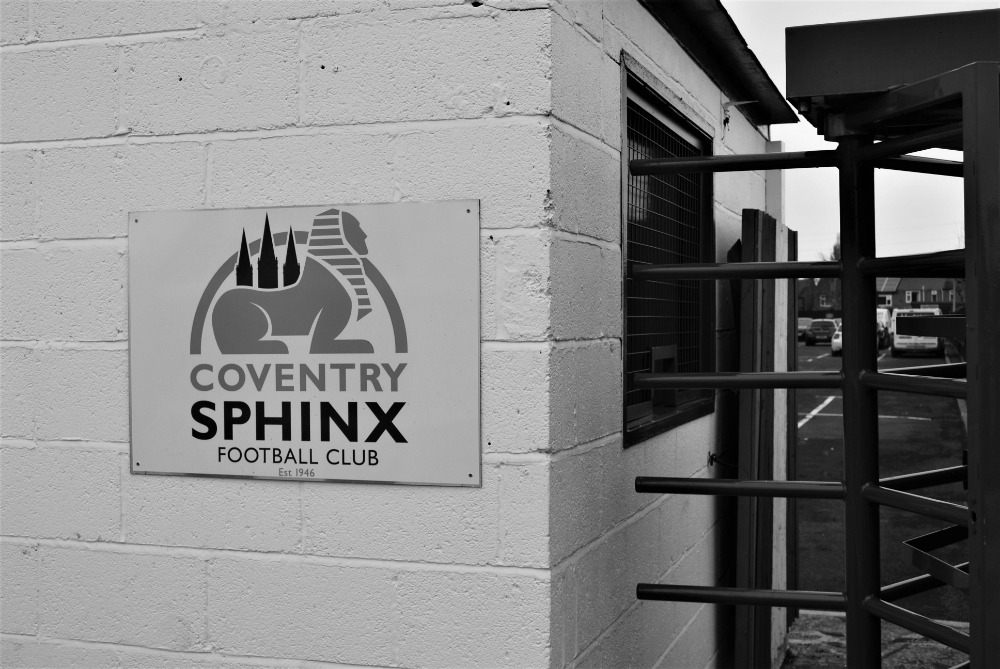
Mine is Coventry Sphinx. Founded in 1946 as Armstrong Siddeley Motors Football Club, Sphinx have quietly been on an upward swing since a frantic and rousing finale saved them from relegation in 2015/16. Improved fortunes under manager Stuart Dutton the following year helped to stabilise the club’s position in the Premier Division.
Dutton left Sphinx in October 2017 and was replaced by Lee Knibbs, another local coach with history at Sphinx Drive. Knibbs immediately oversaw a 13-match unbeaten league run, an impressive feat given the gulf in budgets in the division.
His appointment was a whirlwind. Sphinx lost heavily at Worcester City, Dutton’s tenure came to an end, and Knibbs was announced in short order.
“On the Thursday evening I sat down with the committee. I was working in London, and they asked me if I could meet them that evening,” he told me in the clubhouse before last season’s home match against Wolverhampton outfit AFC Wulfrunians.
“I travelled back, spoke to them, and I thought I was being asked to look after the team for one game on the Saturday. But within the space of thirty to forty minutes they’d offered me the position.”
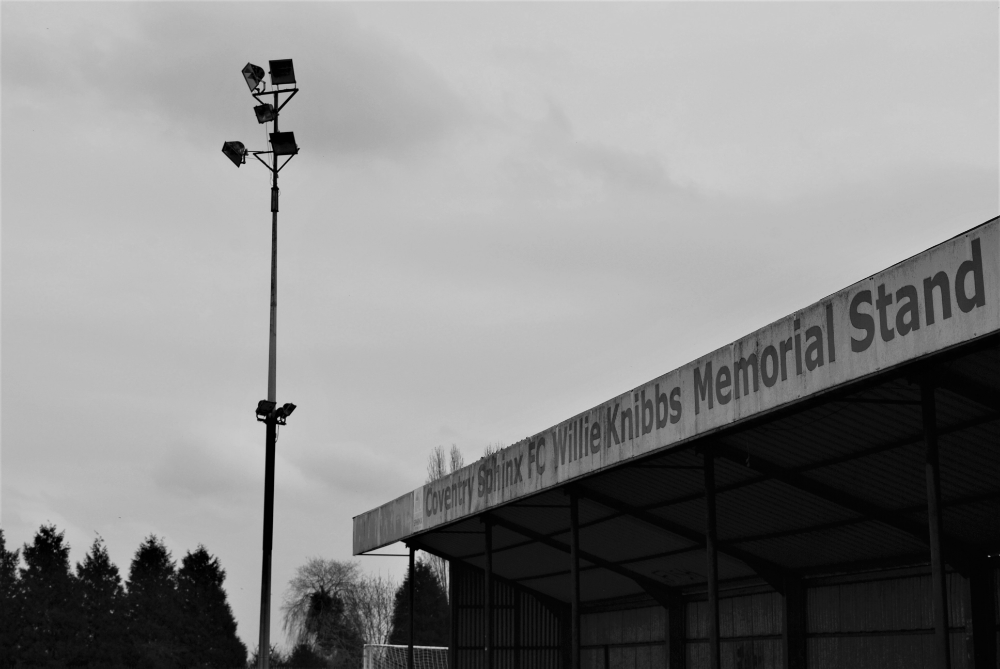
Knibbs is no newcomer to he club. He’s steeped in it. By agreeing to return he followed in the footsteps of his late father, Willie, after whom the club’s grandstand is named.
“It means an awful lot to be the manager here. Obviously what it means to my family, and the name, and the attachment I’ve got. I’ve been around the club since I was about eight, nine years of age. It’s a privilege to be first team manager.”
So, the new manager was in place quickly. But, most importantly, Sphinx’s future is secure. Work behind the scenes culminated in a new 25-year lease with Rolls Royce for Sphinx Drive. If Knibbs’ progress caught the imagination, the groundwork - figurative and literal - was done by the club’s most important piece of paperwork.
Knibbs’ first order of business was to quickly assess his squad and embark on that long unbeaten run, notwithstanding an early and now long forgotten Birmingham Senior Cup exit against West Bromwich Albion.
“We got through the first couple of games and it built confidence,” recalls the manager. “Football can be very much a confidence game at times and the team thrived on that.
“They started to trust what myself and my staff were saying to them, trust the stuff we were doing in training. They were galvanised. We had a team spirit, the environment was right in the changing room. Everyone was buying into it and moving in the right direction.”
During that unbeaten run Sphinx overcame an inauspicious start to an away day at Wulfrunians. The match was delayed for half an hour because the officials were involved in a minor collision en route to Castlecroft and, understandably, elected not to continue their journey. Sphinx’s crushing 5–0 win was worth the wait.
Like all runs, Sphinx’s came to an end with a bump. The hope of promotion was faint from the start and quickly faded to nothing after that first loss, but Knibbs and the team refused to take their foot off the gas.
In the weather-affected months before the visit of Wulfrunians, successive five-goal away wins (5–1 at Lye Town and 5–2 at Shepshed Dynamo) served notice on Sphinx’s remaining opponents. But the results that followed, with Sphinx under-strength but remaining determined, were less impressive.
Wulfrunians spent most of the season in mid-table. They’re a classic Midland Football League side: inconsistent, punching upwards at teams with bigger budgets, and yet always in possession of a threat and capable of springing a surprise.
They arrived at Sphinx Drive on April 7th on the back of a 4–0 defeat at title-chasing Coleshill Town, where Sphinx had fought back to take a point in the very best week of their season. But the Wulfs had previously beaten Heanor Town, a result that on paper was something of a surprise.
The afternoon began with the worry of a postponement reduced to a mere whiff after months of its unavoidable stench.
Referee Simon Kavanagh passed the pitch in the morning and preparations for the game were undertaken as normal. The contrast with the previous week’s debacle prior to the Rugby Town fixture was noted.
Normal really is the word for it, too. The goal nets were dropped. The food was transported from the clubhouse kitchen to The Cabin, the club’s understated sustenance window, including the day’s unexpected addition of faggot batches with mushy peas.
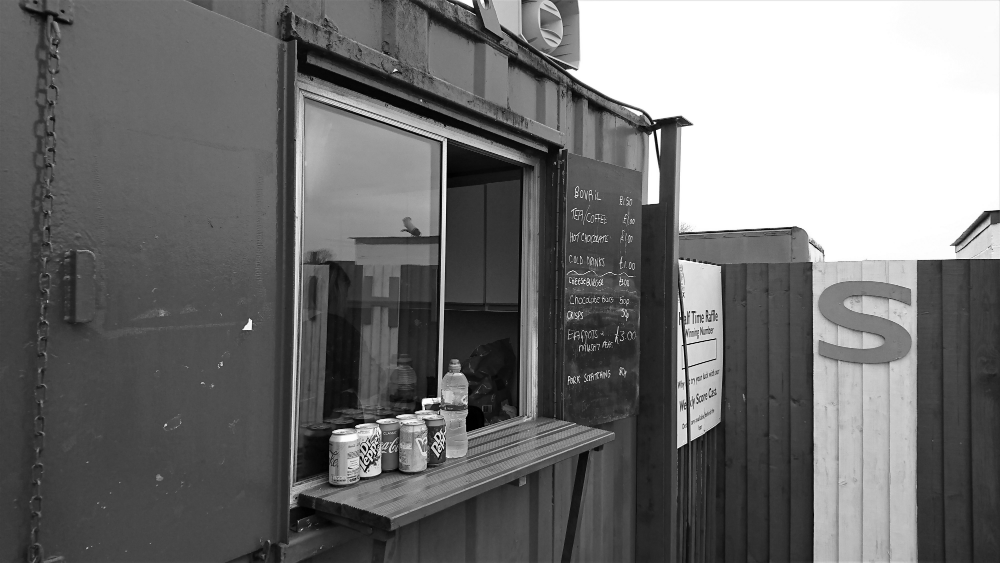
Forms were filled in. Players and officials began their warm-ups. The turnstile was opened. The raffle table was set up. This is non-league normal.
Buzzing around were yet more volunteers with matchday responsibilities. Club secretary Sharon Taylor was, as always, a pre-match blur, Billy Whizzing between pitchside and clubhouse ticking off her long list of duties.
Martin Sutton is the club’s go-to man for an array of vital odds and sods. On the day of a game he runs the Sphinx Shed, from which he sells the matchday programme and a range of other merchandise, and takes the notes that underpin his match reports.
On other days, well, the list of jobs is endless. Sharon, Martin and a small army of others contribute their time to allow Coventry Sphinx to exist. Why?
“Initially you do it because you want to help,” says Martin when we talk by the dugouts in an empty stadium.
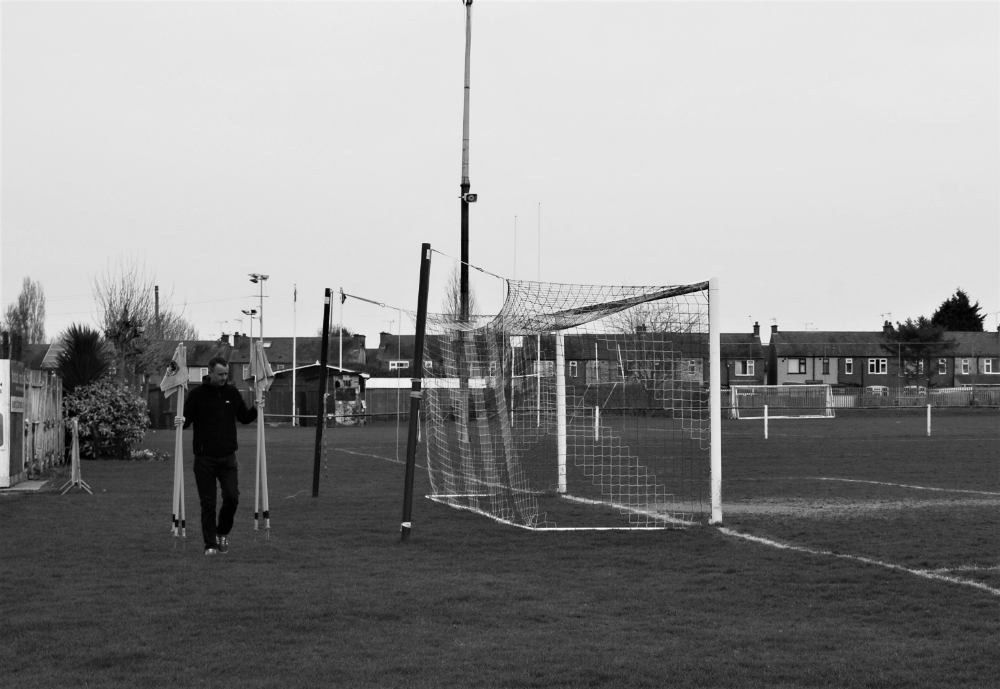
“When you first come here you see how much work goes in from people, for nothing, so we can play football at this level. Particularly the older people, they’ve been doing it for years with no expectation of reward.
“You end up doing more and more because you enjoy helping. And it’s rewarding. The club means a hell of a lot to me and I know it means a lot to everybody else who volunteers their time and efforts around here as well.”
Coventry, of course, has an English Football League club of some repute, albeit one that’s in thrall to an appalling ownership situation, staring homelessness in the face and still recovering from its temporary move to Northampton. Promotion gave the Sky Blues a much needed, but possibly fast-wearing, shot in the arm.
“We get a fair mix of people. There’s been a lot of Coventry City supporters coming up here for quite a few years,” reports Martin. “We’ve got some who don’t travel away with the professional football. They come up here when Cov aren’t playing at home and they’ve been doing that for a long time.
“I’m one of the sort who lost interest in the pro game a few years ago. There’s a few like me knocking around here.”
One of the many joys of non-league football is that there are few dead rubbers. Wulfrunians came to play. Their hosts, taking the lead of their manager, were still targeting a top six place.
For that to even be a possibility in April was a huge step forwards, according to Martin.
“There’s been a greater stability in the squad. That’s contributed a great deal. Credit has to go to Stuart Dutton who started that process and continued it at the start of this season.
“Knibbo’s come in and picked that up and done a great job himself.”
What about the visit of Wulfrunians today?
“It’s difficult not to hope for a win after how well we performed at Wulfrunians,” says Martin. “But we’ve got two or three key players missing, so you never know. Wulfrunians had a great result at Heanor. You can take nothing for granted in this division.”
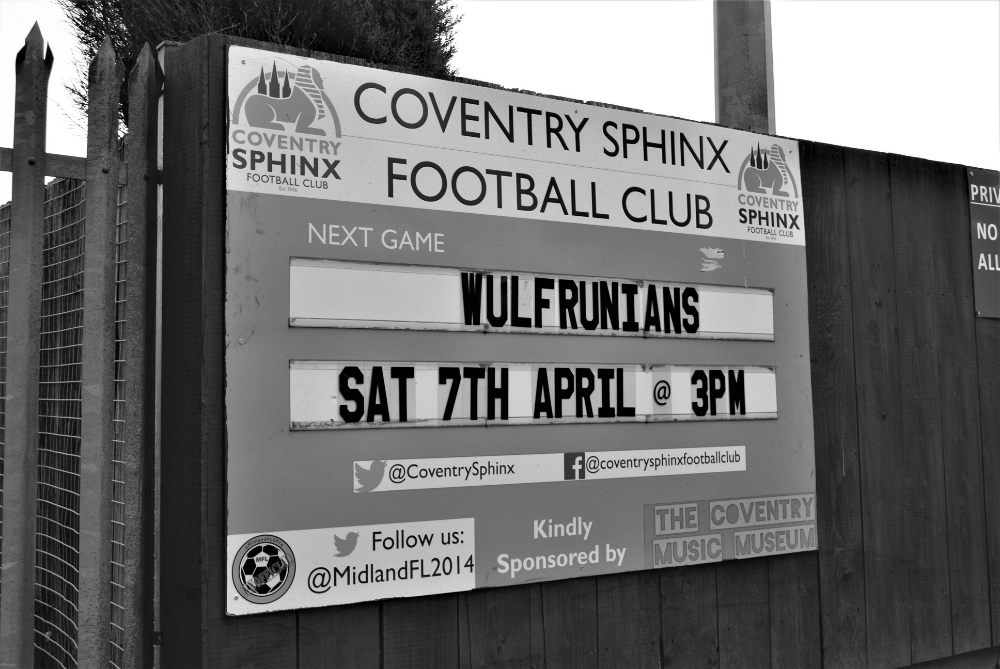
The match took a while to burst into life but evolved into an entertaining affair with enough goals and controversy to sate even the most demanding neutral spectator.
The hosts were not at full strength, a story familiar to so many teams around non-league at that time of year. The two fresh absentees were midfielder Callum Woodward, controversially dismissed in the previous match and now suspended, and Michael Quirke.
The defender, a former Coventry City goalkeeper, was unable to face Rugby because of an injury in the warm-up and was now banned because he was sent from the dugout for twice kicking the ball in the direction of an opponent with the same lethal accuracy as his set-piece passing.
Against Wulfrunians, Sphinx struck first. Aaron Donaldson held the ball up on the edge of the penalty area, spotted the run of captain Scott Lower and nudged the ball into his path. The right back took it in stride, skipping past a defender into the box, and squared the ball for striker Chris Sterling to finish from close range.
It was a goal that came with subtext. Lower’s position once he’d beaten his opponent was one from which many players would have taken a shot, and the Sphinx supporters were by now itching for him to score his first goal for the club. The criticism directed at him for passing instead was, mostly, tongue in cheek.
The response from the visitors was emphatic. Sphinx goalkeeper Jack Tregartha - their third first-choice stopper of the season - reacted well to prevent Dom Moan from scoring but Joe Daley stepped onto it to thump the ball home for Wufrunians’ equaliser.
It wasn’t too long before they were in front. Jumaane Meggoe made the most of the opportunity afforded to him by Sphinx’s inability to halt his long and tricky solo sortie, his shot taking an age to sneak into the bottom corner with Tregartha scrambling.
Sphinx were much more effective in the second half and introduced one of the Midland League’s most potent goalscorers. Ryan Harkin, a young striker who followed Dutton to Sphinx from neighbours Coventry Copsewood, would end the season with the league’s golden boot.
Harkin earned Sphinx a 2–2 draw with a fabulous piece of skill. Left back Rhys Deehan crossed towards him from a deep position and the striker pulled the ball down, turned, and clipped a superb finish into the bottom corner.
But the second period belonged not to Sphinx or Wulfrunians, but to Kavanagh.
Early in the half he elected not to send off Tregartha for a handball outside his box, an offence which not only denied an obvious goalscoring opportunity for a Wulfrunians forward but directly prevented the probable own goal he was following up just in case.
In stoppage time Sphinx were denied a clear penalty. It’s funny how neither side views such incidents as cancelling one another out.
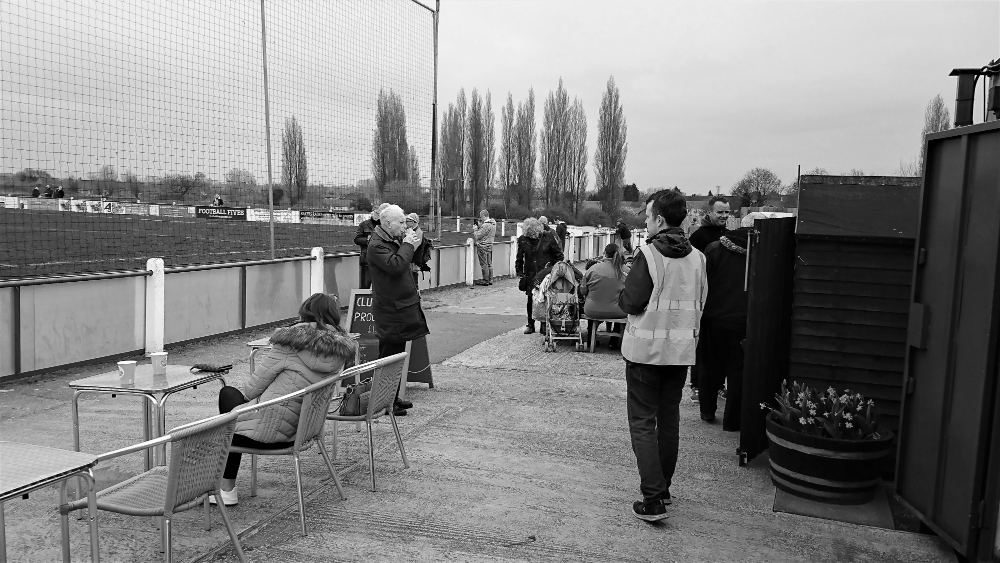
Regardless of results, football is simultaneously just a game and so much more. The results that followed the draw against Wulfrunians meant that the desire to finish in the top six didn’t go to plan in the latter part of the season.
But it’s that belief, that ambition to achieve something and to set goals when the reality of the league table sets no obvious goals for you, that makes Coventry Sphinx my club.
They started the season by playing every friendly like it mattered and ended it fighting for points that were, in reality, of little substantial consequence. I love that.
This season the ambition is even bigger.
“For me, I want to challenge in the league and in the cup competitions that we can realistically go and win,” says Knibbs.
“I’d be a fool to say we’re definitely going to win this or that, but it’s about making sure that we’re in there with an opportunity to win things.
“Key times for me will be New Year’s Day, the end of February, the end of March, we’ll do it month by month, making sure we’re in the cup competitions in the second half of the season, and within five points of the lead come the turn of the year.”
***
Chris Nee
@SphinxFtbl